‘Routine’ Vaccines Paralyzed Their Toddler. It Took the Government 11 Years to Approve a Payout
 David
David 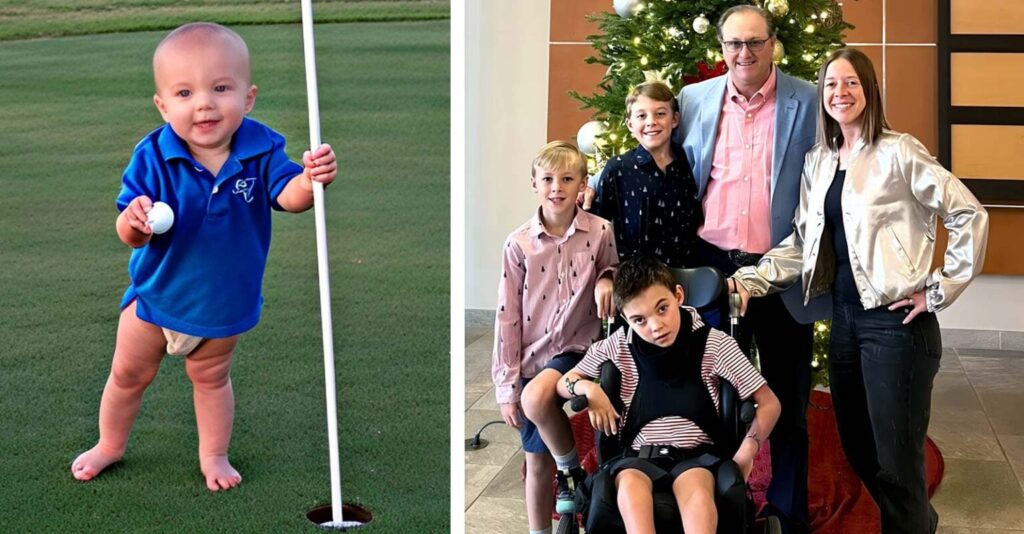
by https://childrenshealthdefense.org/authors/michael-nevradakis-ph-d/
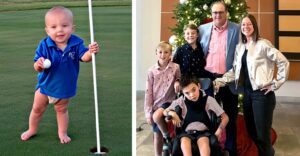
In October 2013, 15-month-old Hayes Heller received multiple, routinely recommended vaccines. Within two weeks, Hayes was paralyzed.
His parents suspected the vaccines were to blame — so they applied to the National Vaccine Injury Compensation Program (VICP). Managed by the federal government, the VICP processes compensation claims for people injured after receiving recommended childhood vaccines.
But as the Hellers would learn, the path to compensation for vaccine injuries is complicated and fraught with delays.
Haye’s father, Heathe Heller, told The Defender the family’s claim ultimately succeeded — but it took more than a decade. And even then, it was incomplete.
The VICP, citing technical difficulties, still hasn’t reimbursed the family for all of the expenses related to Hayes’ care since 2013.
The timeline of the Heller’s quest for compensation looks like this:

Hayes is now 13 years old. He is quadriplegic and requires constant assistance. The Hellers need the funds to care for their son.
Wayne Rohde, an expert in vaccine injury compensation, said he is “not surprised by the length of time” it took for the VICP to resolve the Heller family’s claim. The VICP is “not efficient,” he said.
“When the program considers a new type of case such as the Hellers’, it is difficult for all to move forward expeditiously,” Rohde said. That’s because each case requires medical experts to testify for both sides, and “the process of rebutting or responding by both sides” takes time.
Doctors initially dismissed vaccine injury theory
When Hayes received his 15-month vaccines, he was “meeting all development milestones, and there were no physical abnormalities,” his pediatrician said, according to a 2022 ruling by the U.S. Court of Federal Claims.
But shortly after receiving the flu, pneumonia and DTaP (diphtheria, tetanus and pertussis, or whooping cough) vaccines in October 2013, Hayes became “fussy” and suffered from a fever and “decreased energy levels.” He stopped crawling or playing. He started throwing food.
He saw another doctor, and both diagnosed him with a developmental delay.
“The first week of November, he was dragging his leg and just really lethargic and everything,” his mother, Jenna Heller, told The Defender. “The second week, we woke up one day and he can’t sit up by himself … And then, three days later, he can’t do anything but lay there. He can’t move anything. His lower body can’t move at all … it was extreme paralysis.”
Within a month, Hayes lost meaningful use of his right hand, and his spinal cord was tethered. By early December 2013, he was diagnosed with “rapidly progressive dystonia and encephalopathy.”
“We were starting to think it was vaccines … within a month or two,” Jenna said.
Several doctors suggested Hayes might have Aicardi-Goutières syndrome (AGS) — a rare genetic disorder affecting the brain, immune system and/or skin. “It was either that or HIV, and we ruled out HIV quickly,” Jenna said.
Genetic testing didn’t definitively conclude that Hayes had AGS. However, some doctors said the toddler might have been experiencing a delayed onset of the disorder or “possible AGS” with an “unidentified genetic marker,” according to the ruling.
However, in November 2014, a nurse who examined Hayes wrote in his record that he suffered from “autoimmune response to vaccine.”
And in March 2016, an infectious disease specialist noted that Hayes was “diagnosed with encephalitis of an autoimmune nature presumably due to vaccinations two weeks previously.”
Still, between 2017 and 2019, several doctors and specialists continued to describe Hayes’ condition as “presumed” AGS.
During this period, Hayes suffered from other health challenges, including seizures. He received specialized treatment, including spinal taps, a genetic panel and stem cell treatment in Panama.
Jenna said that while many practicing physicians and specialists suggested Hayes may have had a genetic predisposition that his vaccinations exacerbated, retired physicians — who were likely at more liberty to speak freely about vaccines — told the family vaccine poisoning was the likely cause.
‘VICP is a failure’
In 2014, Hayes’ parents started the VICP process. It required hiring a lawyer from a list of approved attorneys and gathering documents.
They filed their claim in July 2015, alleging that the flu, pneumonia and DTaP vaccines Hayes received caused or “significantly aggravated” his injuries.
It would be nearly five years until the VICP would hold a hearing. During this period, the case was reassigned to a new special master within the U.S. Court of Federal Claims three times. Each time, the family was told that the new special master needed time to review the case.
By the time of the January 2020 hearing, a neurologist who had previously examined Hayes and dismissed the possibility of a vaccine injury changed his mind — he testified on the family’s behalf. Other doctors also testified that they believed vaccines caused Hayes’ injuries.
“We had our pediatrician write a letter saying she believed it was vaccine injury,” Jenna told CHD.TV in an interview last month. “And we had the neurologist who had never testified before and never believed in vaccine injury before Hayes.”
Jenna told The Defender that what was initially slated to be a two-day hearing wrapped up in one day, during which she provided three hours of testimony.
“They really tried to trip us up on the timeline” of Hayes’ injuries and treatment, she said.
The government also brought in an immunologist and an AGS specialist to dispute the vaccine injury claim. However, the AGS specialist was ultimately forced to testify that Hayes did not meet all the criteria for an AGS diagnosis and that she would not issue such a diagnosis if he were her patient.
After the AGS specialist’s testimony, the special master ended the hearing early, Jenna said. She told the family that the government hadn’t presented enough evidence to dispute the possibility of vaccine injury.
The special master asked the family to provide additional documentation to close the case, which the family did in 2021.
“In the vaccine court, you just have to prove that it’s a probability. You don’t have to prove that [the vaccine] actually did it,” Jenna said.
Yet, what appeared at this point to be an open-and-shut case for the Hellers turned out not to be.
In April 2022, the special master denied the Hellers’ claim, relying on its own experts’ testimony and claiming that the family didn’t meet all the criteria in a six-prong test the VICP uses to determine the probability of vaccine injury.
Hayes’ possible AGS diagnosis and the delayed onset of serious symptoms proved to be obstacles for the family’s case before the VICP.
“It kind of took two weeks for [the injuries] to really hit his system,” Jenna said. “That’s why they kind of argued it because it wasn’t [vaccine-related]. All the effects weren’t a day after.”
Ray Flores, senior outside counsel for Children’s Health Defense, said the Hellers’ experience is indicative of VICP’s shortcomings.
“Although it was designed to provide a streamlined system for compensation, this appellate court’s sending part of this 2013 injury case back to the Court of Federal Claims for further consideration proves that the VICP is a failure,” Flores said.
Original denial determined to be ‘arbitrary and capricious’
A month after the VICP denied their claim, the Hellers filed a motion for review. They argued that the special master mischaracterized Hayes’ injuries by attributing them to AGS.
In a process that initially progressed faster than the initial claim, a new special master ruled in October 2022 that part of the previous special master’s analysis was “arbitrary and capricious” and that she did not “articulate a rational basis for her decision.”
The court sent the case back to the previous special master for review.
In 2023, the VICP ruled in favor of the family. The VICP couldn’t definitively conclude which vaccine caused Hayes’ injuries, Jenna said. But it determined that the DTaP vaccine was most likely responsible, based on a greater body of medical literature on injuries related to the vaccine.
But the process didn’t end there — the family was asked to provide receipts and documentation for their expenses dating back to when Hayes first developed symptoms.
The case closed in October 2025. The first payout was made in February 2026.
Payout ended up being only 10% of their $3 million claim
Even the payout process was fraught with obstacles, Jenna said. The VICP would reimburse only those expenses for which the Hellers had receipts — even if medical documents proved that appointments and treatment had taken place. Banks couldn’t provide statements over seven years old.
The VICP rejected other receipts and expenses due to technicalities. “We bought an RV so we could transport [Hayes] better through all these procedures, and they were like, ‘No, that’s extracurricular,’” Jenna said.
Other expenses included Hayes’ round-the-clock care for 12 years, and trips and consultations with specialists in and outside the U.S.
“You’re incurring crazy amounts of cost, like taking off work,” Jenna said. “He’s had 10 surgeries, probably, eight to 10 surgeries, and then he’s had over 20 procedures.”
During this process, Heathe’s company folded, resulting in a loss of income for the family. There was no way to claim this loss to the VICP, Jenna said.
“The out-of-pocket expenses we ended up getting back were 10%” of their $3 million claim, Jenna said. “They don’t tell you how difficult it’s going to be.”
“They basically pinned us in a corner where we finally had to just accept this 10%,” Jenna said. She suggested the VICP slow-walked the process because if Hayes died, the family would only receive a death benefit of $250,000.
“That’s their whole deal to push it for all this time … pushing it for him to die so they don’t have to pay anything out,” Jenna said.
Today, the VICP deposits money into a trust for Hayes’ care, including for a life-care planner, nursing expenses, hospital equipment, diapers and feeding.
According to Jenna, the VICP limits reimbursements and payouts to the greatest possible extent, including limiting pain and suffering expenses to a $250,000 lifetime cap, and lost wages on a scale comparable to a migrant farmworker’s lost wages.
‘Trapped in his own body’
Today, Hayes is “super aware,” and his brain scans are normal, Jenna said. But he’s unable to speak, suffers from high inflammation and is confined to a wheelchair.
Hayes is “trapped in his own body. He is so physically compromised. Seeing him suffer all the time, like seeing your child suffer all the time, is the hardest. You know, he’s always upset. That’s definitely the hardest of all of this,” Jenna said.
Rohde said the “hidden cost of this story is what happened to the family unit,” because the VICP “is not designed to compensate the family for their sacrifice.”
Jenna recommended that anyone who has to navigate the VICP process keep all documentation, including “bank statements and printed receipts.”
“The bigger it is, the more they’re going to fight you, and it’s not going to seem worth it at the end,” Jenna said. “It’s not set up for families.”
Watch CHD.TV’s interview with the Heller family here: